
FIREARM VALUE
How Much Is My Gun Worth
Gun value guidance covering fair market value, replacement value, price guides, and completed-sale comparables, prepared in accordance with USPAP when a documented number is required. Firearms Appraisers values handguns, rifles, shotguns, and collector firearms for estates, insurance, donations, and divorce.
- Fair market value built from completed sales, not asking prices
- Condition, originality, and provenance documented gun by gun
- A signed USPAP report when an insurer, court, or the IRS needs the number
THE SHORT ANSWER
Your Gun Is Worth What Buyers Have Recently Paid for a Matching Firearm in Matching Condition
Your gun is worth what a willing buyer has recently paid for the same make, model, and condition. That figure is fair market value. It is usually lower than a dealer's asking price and often differs from a printed price guide. A quick lookup gives you a rough range, while a documented appraisal gives you a number an insurer, a probate court, or the IRS can rely on.
Start with what you can see. Make, model, caliber or gauge, barrel length, finish, and serial number identify the firearm. Original condition, factory papers, and any provenance then move the figure within that range. For common production guns, a check against completed sales is often enough for a private sale. For antique, engraved, limited-production, or military pieces, small details change value substantially, and a professional gun appraisal is the safer route.
Be careful with the sources you use. Asking prices overstate value because unsold listings stay visible. Price guides give baseline figures, not values for the specific gun in your hands, which is why many owners ask whether the Blue Book of Gun Values is still accurate and whether there is a Kelley Blue Book for guns. Resale outcomes also vary widely from one firearm to the next, as we explain in do guns have a good resale value.
VALUE DRIVERS
Six Factors Move a Firearm's Value More Than Its Make and Model Alone
Our appraisers document each of these factors for every firearm, and any one of them can shift the value:
- 01
Condition and originality
- Original finish versus refinish
- Bore and mechanical function
- Wear, pitting, and repairs
- 02
Exact identification
- Make and model
- Variation and production period
- Serial number and markings
- 03
Rarity and demand
- Limited or discontinued production
- Collector interest in the maker
- Regional hunting and sporting demand
- 04
Completeness
- Original box and papers
- Factory accessories
- Matching serial numbers on parts
- 05
Modifications
- Aftermarket parts and finishes
- Professional versus amateur work
- Whether changes can be reversed
- 06
Provenance
- Documented ownership history
- Military or historical use
- Engraving or presentation details
VALUE SOURCES
Five Ways to Estimate a Gun's Value and What Each One Is Good For
Each method answers a different question, and only some produce a figure that holds up outside a private sale.
Price guides
Baseline figures by model. Useful for a first look, but they cannot see condition or provenance. See how accurate the Blue Book is today.
Completed online sales
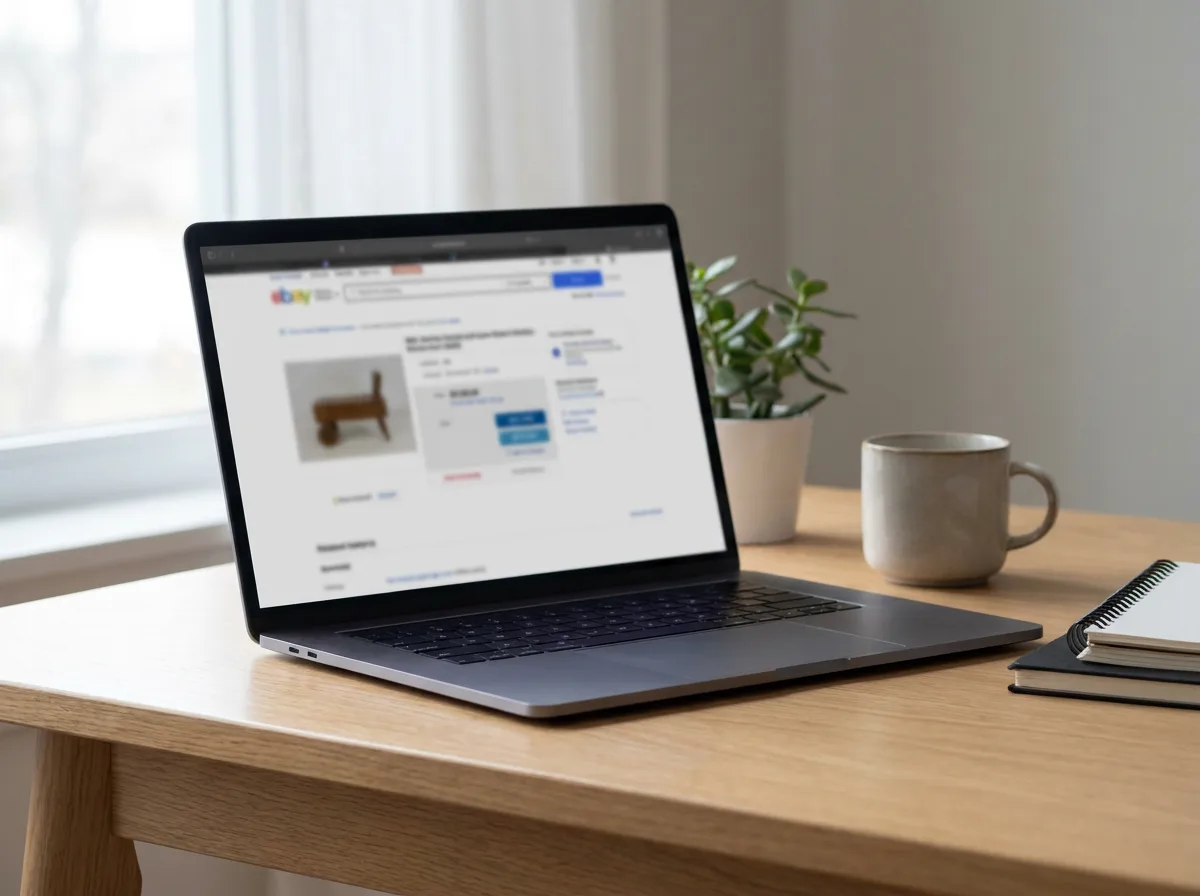
Closed auction results show what buyers actually paid. Read bid counts and reserves with care, as covered in sold prices vs asking price.
Dealer offers
A dealer buys to resell, so an offer reflects margin as well as value and is not the same as fair market value.
Auction house results
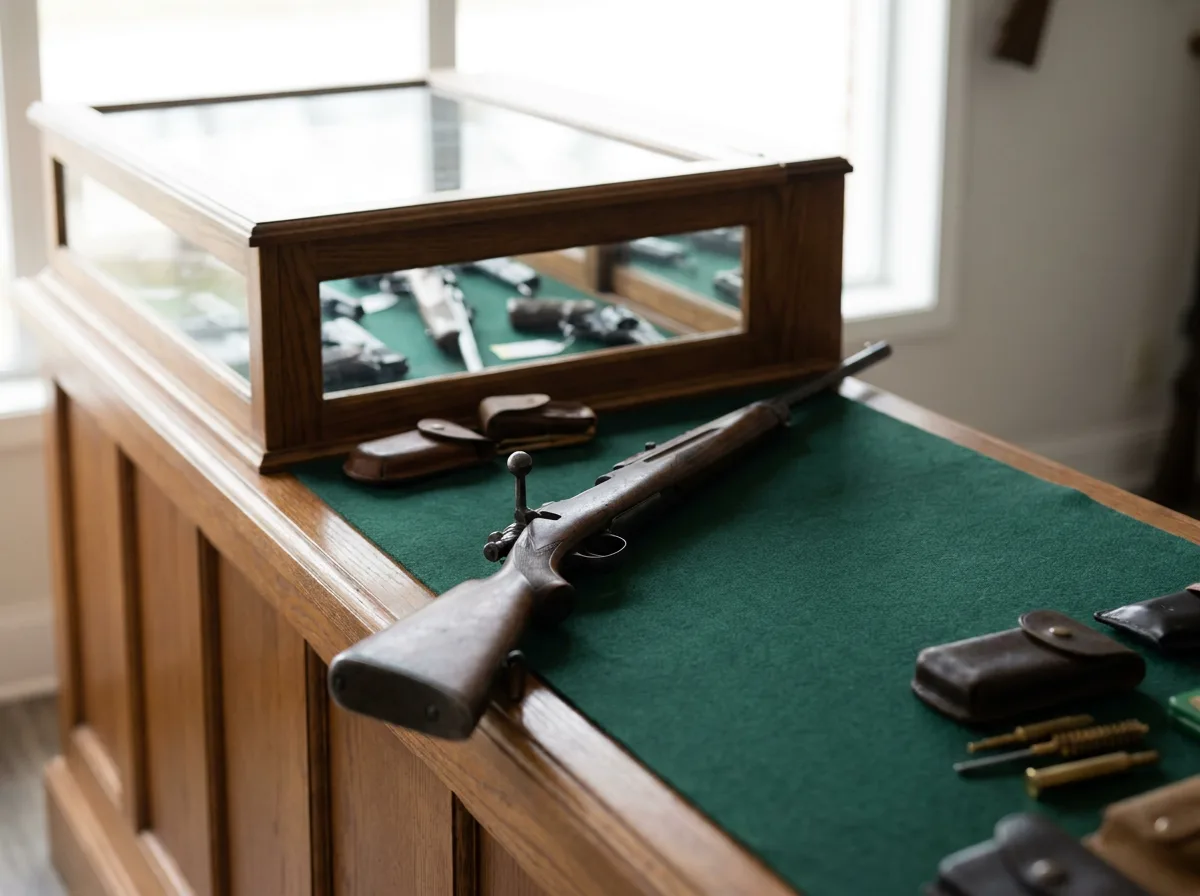
Detailed catalog grading helps with collector pieces, though hammer price and price realized include different amounts.
Professional appraisal
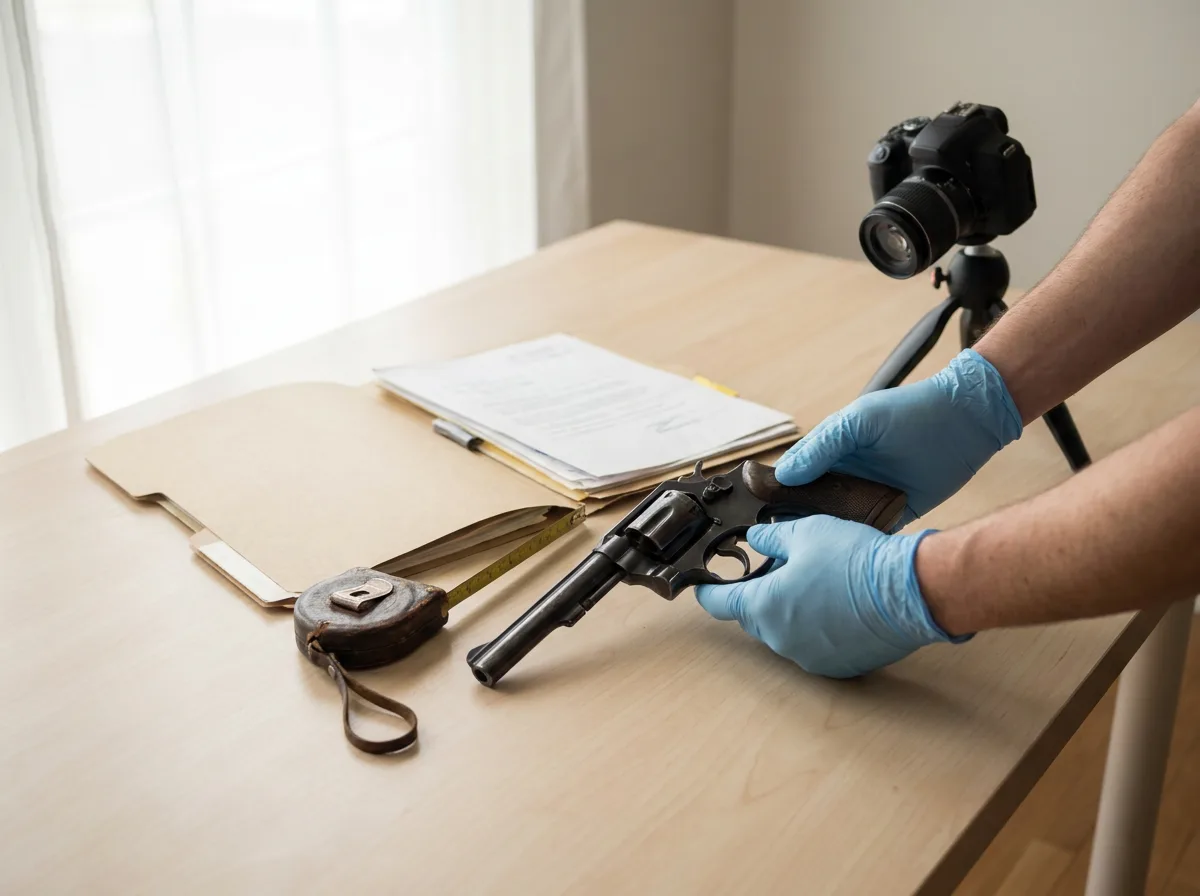
A documented opinion of value with comparables and methodology, prepared in accordance with USPAP for insurance, estate, and legal use.


PURPOSE
The Right Value Depends on Whether You Are Selling, Insuring, Settling an Estate, or Donating
The same firearm carries different values depending on the purpose, so decide what the number is for before you collect comparables. Our purpose pages explain what each situation requires:
- Estate and inheritance, which use date-of-death fair market value: probate, estate tax, and inherited gun appraisal
- Insurance, which uses replacement value for coverage and loss: insurance coverage and insurance claims, plus our guide to replacement value vs fair market value
- Charitable donation, which uses fair market value documented for IRS Form 8283: gun appraisal for charitable donation
- Divorce, which uses fair market value as of the date your court requires: gun appraisal for divorce
- Planning ahead for trusts, gifts, and division among children: gun appraisal for estate planning
Wondering whether an appraisal is possible for your situation or what it costs? Read can guns be appraised and how much it costs to get guns appraised.
HOW WE VALUE YOUR GUN
We Turn Photos and Serial Numbers Into a Documented Value
- 01
Send photos and markings
Upload clear images of every side, the barrel and receiver markings, the serial number, and any papers or box.
- 02
We identify and grade each firearm
Our appraisers confirm the exact model and variation, then grade condition and originality.
- 03
We research completed comparables
We match each gun against recent completed sales rather than asking prices or dealer offers.
- 04
You receive a USPAP report
An itemized, signed report states the value, the evidence behind it, and the purpose it was prepared for.
VALUE QUESTIONS
Questions Owners Ask Before Putting a Number on a Gun
Does the serial number change what my gun is worth?
Yes, often. The serial number lets an appraiser date the manufacture and confirm the production variation, and some serial ranges carry collector premiums. Include it with your photographs so the value reflects the exact gun.
Should I clean or refinish an old gun before having it valued?
No. Refinishing or heavy cleaning can reduce the value of antique and collector firearms, because originality matters more than appearance. Leave the finish as it is and photograph the gun in its current state.
Is a dealer's offer the same as my gun's value?
No. A dealer has to resell at a profit, so an offer sits below fair market value. Comparing the offer to a documented value shows how much of the gap is margin.
Do original box and papers really add value?
Yes. Completeness adds measurable value, especially for collector firearms, because buyers pay more for guns that can be documented. Photograph the box, manuals, and any factory letters with the gun.
Is the value used for insurance the same as the value for selling?
Not usually. Insurance typically uses replacement value, while a sale, estate, or donation uses fair market value. Tell us the purpose and we prepare the report for that use.
GET YOUR NUMBER
Get a Fixed-Fee Quote to Document What Your Gun Is Worth
Tell us about your gun or collection and what the value is for, and we will respond with a fixed-fee quote before any work begins.